

I have read, listened, written, drawn, painted, photographed, visited… Everything can be more interesting if you remain curious, if you do not lose the desire to learn and experiment. I pause to observe the contrasts of colors, the different points of view of a shot, the sound of synonyms with which the same thing can be described, the harmony of a painting. A note can also be color, poetry is also melody, an image can scream more than one word. The expression: that's all... it's all here. (Editorial Director - Art Director)

To talk about myself I would use the English concept of Language Enthusiast, with its bad translation into Italian. Years of study, travel and authentic and pulsating passion for what lies beyond the border converge in this expression. I have an indiscriminate interest in any culture and any person with a story to tell. I remain with difficulty compressed in my dimension, I feel the continuous need to push myself further. I can't stand the innuendo, the half sentences and the boredom of waiting rooms. Certainly communicative, analytical, I split reality into a thousand pieces and then reassemble it. I think and write in 4 languages, which I love all of them, because inside they sing me a beautiful song. (Editor - Translator).

What unites Piacentini's Architecture with Greenaway's Cinema, Munari's Design with Tiepolo's painting and Kandiskij's studies? What unites the election posters with the paper tickets we used for the tram? For visual culture, the challenge of the third millennium lies in seeing the red thread that binds each of its branches to tell the image and aesthetics. I would like to do it through a passion that comes from the tradition of classic cinema. After all, what is the history of Design if not the cerebral attempt to give a soul to matter, to plagiarize the form according to its most hidden meaning and all to be revealed? (Editor - Reporter)
 200
 11
The cottage is making a comeback thanks to "cottagecore", an aesthetic movement centered on celebrating an idealized rural life connected to nature. While social media trends championing this style are often well-intentioned, they sometimes risk trivializing an aesthetic that - when thoughtfully conceived and executed with technical skill - can be truly substantial.
Naturally, like similar movements, this wholesome "vintage" longing can also be seen as a reaction against the exhausting nature of modern life, with its relentless drive for frenetic activity and high performance at any cost?a culture of constant addition rather than subtraction. Yet, if interpreted with moderation and propriety rather than as a mere knee-jerk reaction, it reveals a timeless appeal.
The cottage has deep roots - even etymologically - stretching back to Anglo-Saxon culture in the Late Middle Ages (specifically the 13th century). The term originally referred to a modest country dwelling, often associated with a barn and an enclosed yard.
Although early cottages were humble - mand at times inevitably spartan - the concept has evolved significantly over the centuries, effectively turning its original premise on its head: it has transformed from a dwelling born of necessity into a symbol of refined simplicity, far removed from its humble origins.
Much of this shift is due to the pioneering work of interior designer John Fowler and decorator Nancy Lancaster. During the first half of the 20th century, while restoring British country homes damaged in World War II, they favored clean lines and understated materials, enhanced by details that would go on to define the cottage style.
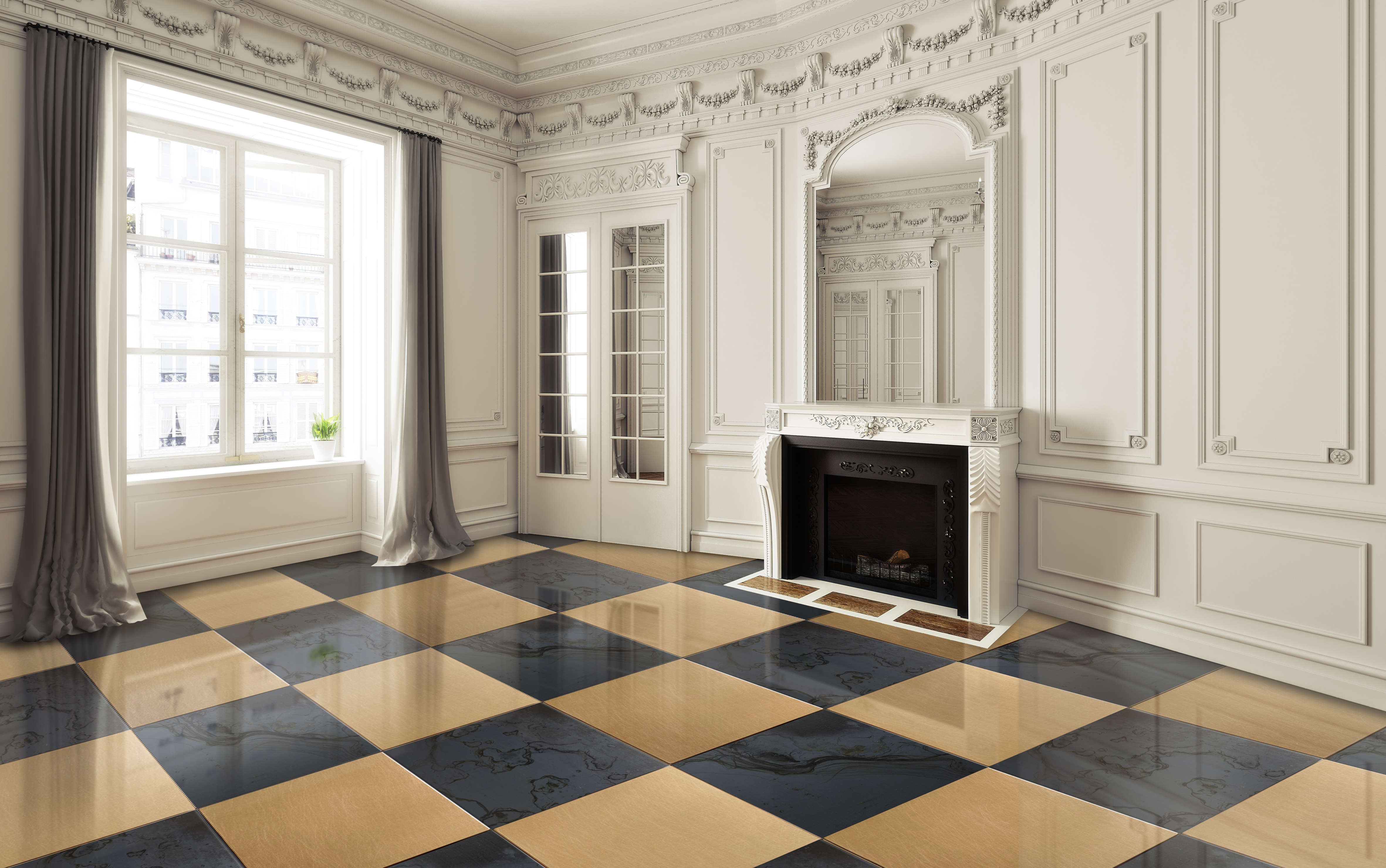
Metal as a design surface
No longer merely a functional material, metal is entering interiors as a decorative element, transforming the floor into a distinctive design feature. Planium's metal tiles and textures reinterpret classic traditional geometries - such as checkerboard, herringbone, and modular patterns - through light and reflection; the natural nuances of brass, mill scale, and stainless steel create surfaces rich in reflections, depth, and natural variations.
In interiors ranging from Hollywood Regency and sophisticated cottage styles to contemporary classic, the metal creates a striking dialogue with wood panelling, stucco mouldings, fabrics, and textured furnishings. Its presence adds depth to the space, shifting in appearance throughout the day as the light and viewing angle change; when light meets the metal, the floor itself takes on a new character.
Like wood and stone, each surface possesses its own unique identity. Subtle colour variations, grain patterns, and irregularities in the metal are not imperfections, but distinctive features that make every composition unique.
A floor designed not merely to cover a surface, but to define the atmosphere of the room.
Classic elegance, contemporary materials
The timeless geometry of a chessboard pattern meets the distinctive character of brass and calamine steel.
The contrast between warm tones and dark surfaces defines the space with an elegant, dramatic rhythm, evoking the most refined interiors of European tradition and Hollywood Regency style.
Light reflects off the tiles in ever-changing ways, giving the floor a sense of life, depth, and dynamism. An ideal solution for living rooms, entrance halls, boutiques, hotels, and residential spaces where the flooring takes center stage.
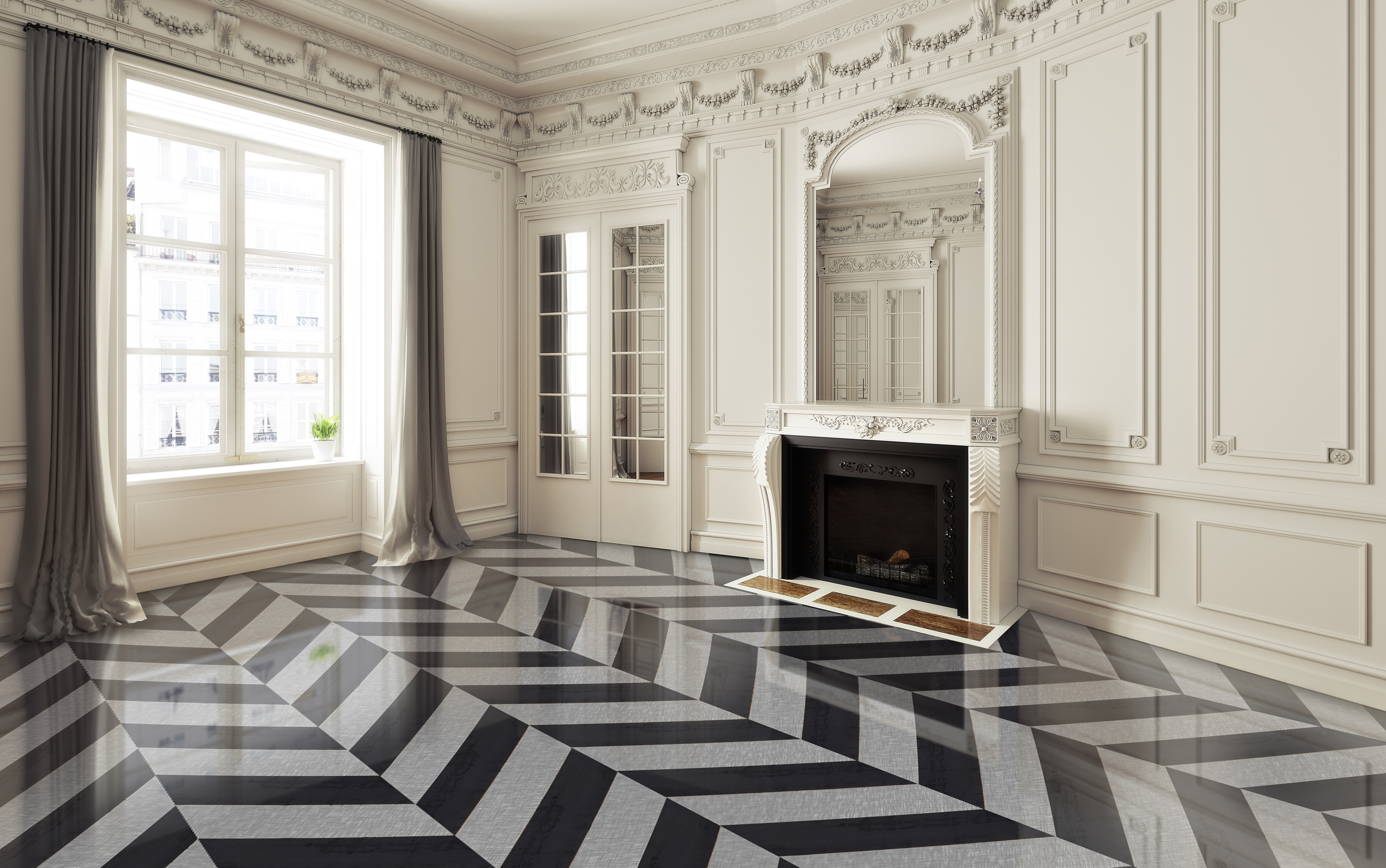
Moving metal geometries: a concrete example with Planium
Stainless steel and mill scale combine to form a dynamic pattern inspired by the herringbone layout but reinterpreted with a contemporary twist.
The interplay between luminous surfaces and deep tones enhances the perception of space, creating a sense of movement and ever-changing perspectives.
The result is a floor of significant architectural merit: geometrically precise yet vibrant, thanks to the material's natural metallic variations. It is a surface equally suited to classic interiors and projects defined by a more modern, minimalist aesthetic.



31 luglio 2025 - by La Redazione TBlog