

I have read, listened, written, drawn, painted, photographed, visited… Everything can be more interesting if you remain curious, if you do not lose the desire to learn and experiment. I pause to observe the contrasts of colors, the different points of view of a shot, the sound of synonyms with which the same thing can be described, the harmony of a painting. A note can also be color, poetry is also melody, an image can scream more than one word. The expression: that's all... it's all here. (Editorial Director - Art Director)

To talk about myself I would use the English concept of Language Enthusiast, with its bad translation into Italian. Years of study, travel and authentic and pulsating passion for what lies beyond the border converge in this expression. I have an indiscriminate interest in any culture and any person with a story to tell. I remain with difficulty compressed in my dimension, I feel the continuous need to push myself further. I can't stand the innuendo, the half sentences and the boredom of waiting rooms. Certainly communicative, analytical, I split reality into a thousand pieces and then reassemble it. I think and write in 4 languages, which I love all of them, because inside they sing me a beautiful song. (Editor - Translator).

What unites Piacentini's Architecture with Greenaway's Cinema, Munari's Design with Tiepolo's painting and Kandiskij's studies? What unites the election posters with the paper tickets we used for the tram? For visual culture, the challenge of the third millennium lies in seeing the red thread that binds each of its branches to tell the image and aesthetics. I would like to do it through a passion that comes from the tradition of classic cinema. After all, what is the history of Design if not the cerebral attempt to give a soul to matter, to plagiarize the form according to its most hidden meaning and all to be revealed? (Editor - Reporter)
 111
 10
Planium is a brand of Terenzi Srl, a company with years of experience in metal flooring and wall cladding. From stainless steel to brass, mill scale to copper, and embossed finishes to artistically oxidized metals, each texture speaks its own material and chromatic language. Architects and interior designers can select these finishes to create tasteful interiors, exploring diverse directions that pay homage to or echo various styles and eras. The wide range of locations and venues featuring Planium's work - spanning Italy, Europe, and the globe (including Paris, Milan, New York, Florence, Rome, London, Stuttgart, and Venice)- demonstrates the metal's versatility. Here, we explore how certain textures might align with a Gothic aesthetic and how echoes of this style are already present in completed projects.
The Gothic: History, Fascination, and Pop Culture
One could argue that the Gothic represents one of the two "pop" faces of the Middle Ages as currently marketed in the West. On one hand, there is the imagery of medieval tournaments, ladies, drapery, clear skies, and heraldry characterized by exquisitely elegant colors and forms. On the other, there is an architecture, a mood, and a color palette that are deeply "dark"? - shadowy, somber, and captivating, partly due to the sense of divine mystery they evoke. Indeed, for many, the term conjures images associated with France, parts of Germany, and England (particularly through literary traditions, including the "Victorian Gothic Revival"). There is nothing wrong with that, yet it is a pity that Italy fails to fully reckon with the history that followed the "ancient" Greco-Roman era; after all, our country is effectively a capital of Gothic art and of the most refined Gothic style in the world. From the Northern European craftsmen in Assisi to the Angevin era in Naples and the distinctive Late Gothic phase as reinterpreted in Tuscany, artists such as Pisanello, Tino di Camaino, Nicola and Giovanni Pisano, and Arnolfo di Cambio bear full witness to this legacy. Why, then, not highlight - even in contemporary interior design - what is truly a key strength of our culture?
Reinterpreting the Gothic style for contemporary interiors does not necessarily mean replicating its arches, spires, or ornamental motifs. Rather, it can mean capturing its atmosphere through materials, without necessarily mimicking its forms.
Chromatic depths, reflections, the interplay of light and shadow, and surfaces marked by the passage of time these elements of Gothic imagery find a surprisingly contemporary yet "ancient" interpretation in metal; after all, this material has been part of human life for centuries, predating even the Middle Ages!
Embracing Gothic trends with Planium metals
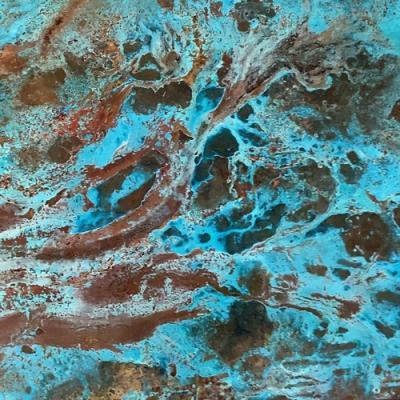
Planium's metal sheets allow these evocative qualities to be brought into contemporary spaces without resorting to mere, hollow stylistic imitation. Calamine, with its deep, shifting hues, can evoke the darker, more mysterious side of the Gothic style - its most instantly recognizable, though not its only, facet. Copper, bronze, and brass, on the other hand -particularly through oxidation and surface alterations - introduce the themes of time and the transformation of material.
Light, too, becomes part of the design. Just as in Gothic architecture light altered the perception of space as it streamed through vast stained-glass windows, here - on contemporary metal surfaces - it encounters reflections, areas of opacity, and "irregularities" that constantly transform the material's appearance.
Planium's "burnished" (oxidized) steel is a promising starting point - or clue- worth considering; after all, the Gothic style is not defined solely by silvery tones. While silver is the first thing that comes to mind, it is not the only option, and we should avoid thinking in limited or stereotypical terms. Wrought iron - dating back to the Early Middle Ages - closely approximates this distinctive tone that sits somewhere between cold and warm, between winter and autumn: it is not quite brown (though it leans that way), yet neither is it simply "grey." Using these textures for flooring or wall cladding evokes that specific mood; when paired with "cold" steels, the result can feel distinctly medieval. Consider, for instance, the embossed finish - a technique deeply rooted in that era - which one might naturally describe as "Gothic" given its origins. Of course, an interior designer might also choose Planium's embossed steel to suit a modern aesthetic, or to break up a contemporary setting and add a sense of vigor - as seen in projects like the Porsche Museum in Stuttgart or The Puma Headquarters in Milan.
Pairing stainless steel with calamina (hot-rolled steel with mill scale) is another option for evoking this era: silvery-grey tones on one side and an anthracite-blue hue on the other create an interplay of colors reminiscent of the Europe of great cathedrals and soaring spires. The color balance must be carefully chosen, taking into account how light - another essential element in this architectural style- enters the interior space. One might envision a checkerboard pattern, or -even better and more functional - an alternating floor layout featuring a blue calamina base with inserts of brushed or satin-finish stainless steel, or vice versa.
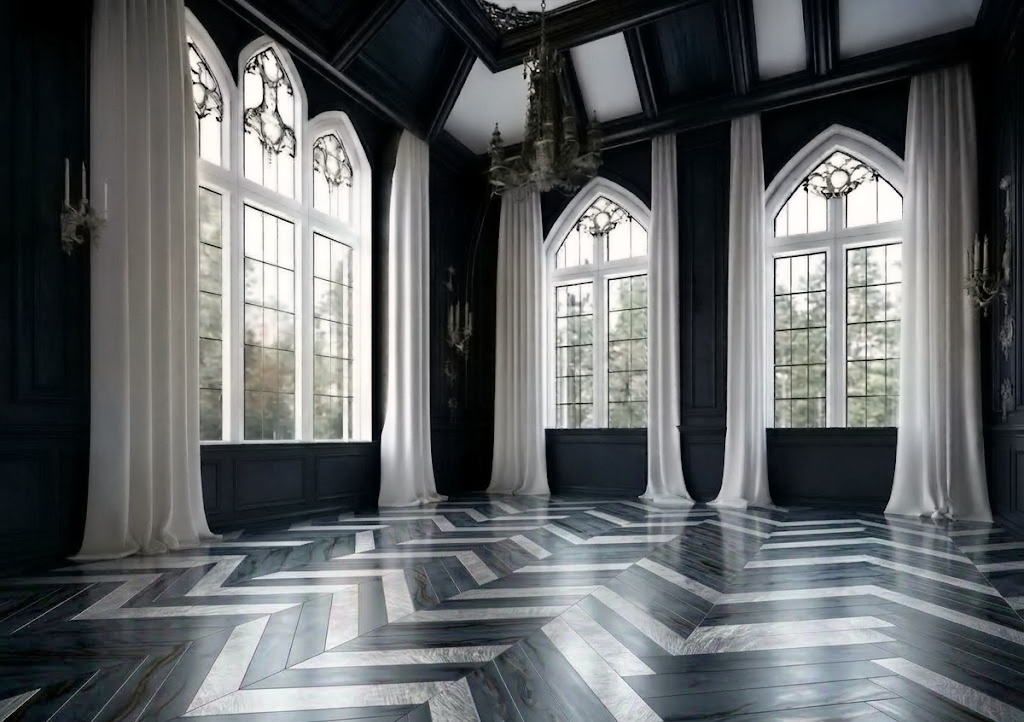
Indeed, the Scuola Grande della Misericordia in Venice, built starting in the 14th century, features Calamina Planium flooring; calamina was also used to clad parts of the ticket office and foyer interiors at the Palazzo della Signoria in Florence, another historic Italian building whose construction began between the late 13th and early 14th centuries.
The reference to the Gothic style thus becomes more subtle: a revival of its ability to create atmosphere through material, color, and light. It is a historical memory that metal can bring into contemporary interiors through a renewed design language.



31 luglio 2025 - by La Redazione TBlog